
Paris–Brussels or Paris–London with a private driver: time, comfort and planning
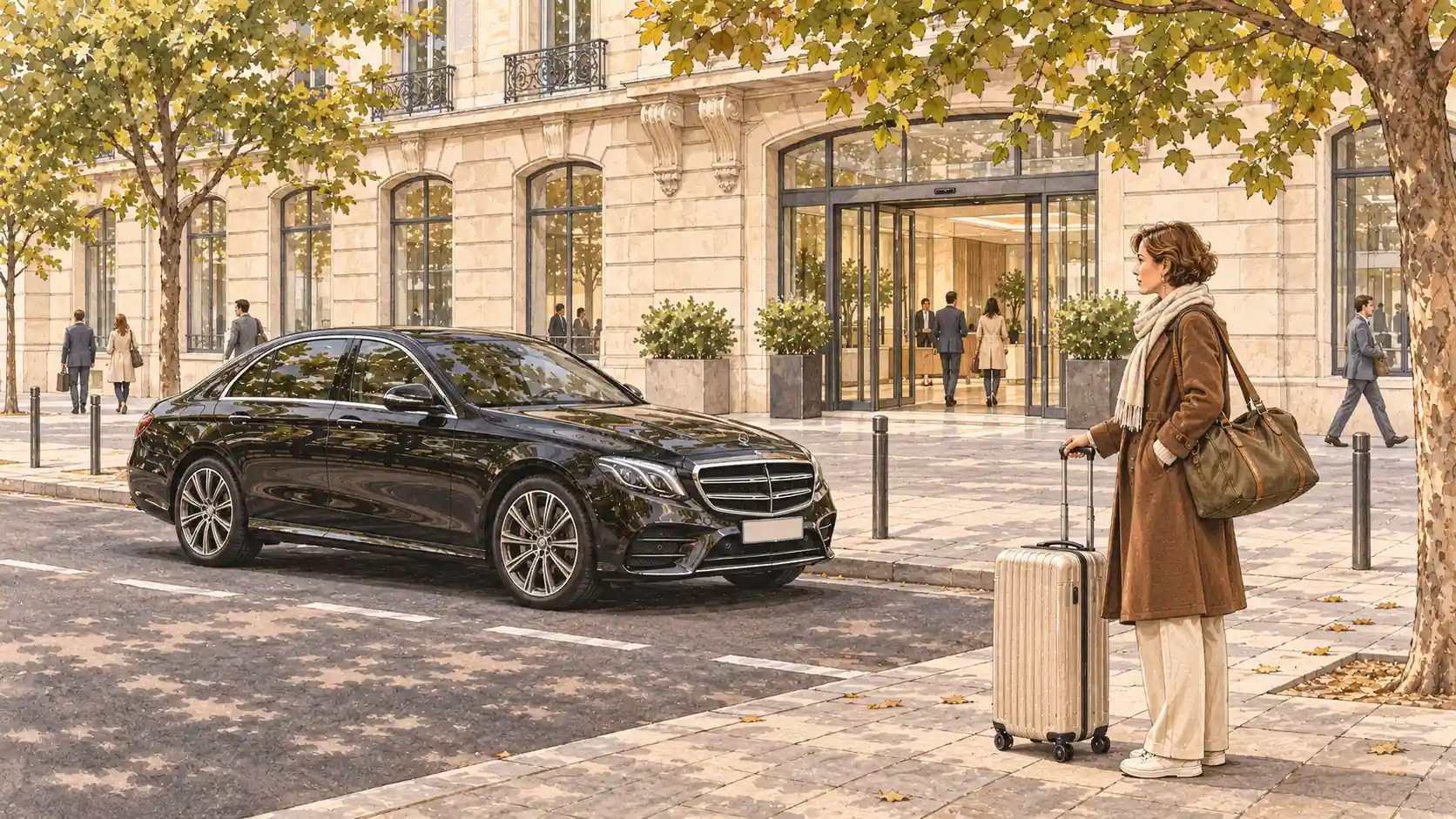
To reach Brussels or London from Paris, a private driver offers an organised journey between two addresses, with a driver and a vehicle suited to your programme. The train remains an alternative worth comparing seriously, especially when your appointments are close to the stations. The right choice depends on door-to-door time, luggage, the comfort you expect and the conditions of the trip. Here is how to prepare these two routes without confusing driving time, the Channel crossing and total journey time.
Paris–Brussels or Paris–London with a driver: for whom and when?
For a chauffeur-driven trip in Europe, the first advantage is a direct link between the two addresses of your choice. That may be a business meeting, a hotel, a private address or an airport. The service is planned around these places rather than around a single train timetable.
For a family with a lot of luggage or several travellers, the question is also about the bags to carry and the connections. For a business traveller, a premium private driver can offer the chance to work or rest during the journey.
A private driver is not automatically the fastest or the cheapest option. Compare the whole programme. Brussels and London each have their own particularities and need to be prepared separately.
Real journey time: a direct road to Brussels, a crossing to London
Paris–Brussels transfer: an estimate between your two addresses
A Paris–Brussels transfer follows a direct road route of around 300 km, with no Channel crossing. To get a useful duration, include in your booking request the exact addresses, the date, the departure time and any planned breaks. Ask for an estimate between the pick-up point and the arrival address.
Distinguish between the expected driving time, the stops and the margin kept before your appointment. A departure from an airport and a departure from central Paris are not the same journey. "Arriving in Brussels" should also be replaced by a precise address.
The estimate given by the driver should match your actual programme. For an important appointment, state the arrival time you need in your request, so that the departure time can be worked out accordingly.
Paris–London: the 35-minute tunnel crossing is not the length of the journey
LeShuttle carries vehicles by rail shuttle between Calais and Folkestone through the Channel Tunnel. The operator states a 35-minute crossing.[1] This figure covers the crossing only, not your journey from Paris to London: you need to add nearly 300 km of road to the Calais terminal, then just over 100 km from Folkestone to London.
To plan door-to-door time, separate the drive to the terminal, check-in before boarding, controls and waiting, the crossing, and then the drive to the London address. Add the agreed breaks. If the provider suggests a ferry, ask for a programme specific to that option: do not apply the time announced for LeShuttle.
As a rail alternative, Paris–London by Eurostar takes around 2 h 20 from station to station.[2] You then need to add your journeys to and from the stations, as well as the time needed before departure. The comparison should cover the entire trip.
Private driver, train or your own car: comparing door to door
Start from the same address, the same destination and the same arrival deadline. For the train, look at the timetable of the service you are considering, access to the station and the last leg of the trip. For a private driver, ask for the full schedule. For your own car, also factor in driving and parking at your destination.
| Criterion | Private driver | Train | Your own car |
|---|---|---|---|
| Organisation | Addresses and programme agreed with the transport provider | Train times and station access to coordinate | Route and stops to organise yourself |
| Driving | Handled by the driver | No driving during the rail journey | Your responsibility for the road sections |
| Luggage | Vehicle capacity to confirm | Loading and moving through stations to plan | Your car's capacity to check |
| London | Road, crossing and formalities to coordinate | Rail journey and checks at the station | Crossing, formalities and driving to organise |
| Budget to compare | Full quote for the group | Tickets and additional transport | Journey costs and parking |
Taking the train does not necessarily mean booking a driver at each end: compare the access options that suit your addresses. Door-to-door service is the advantage to examine with a private driver, not proof that it will always beat the train.
Comfort on board: which vehicle range for several hours on the road?
Over several hours on the road, a premium vehicle is chosen to meet a specific need: room for passengers, boot capacity, seating comfort or quiet on board. A prestige sedan and a more spacious vehicle do not necessarily solve the same problem.
The following benchmarks help you read a proposal. They should be confirmed for the vehicle actually booked, based on your real luggage.
| Model | Category | Passengers and luggage | Key point |
|---|---|---|---|
| Mercedes E-Class | Business sedan | 3 passengers; around 3 cabin suitcases | Balance of comfort and budget for one traveller or a small group |
| Mercedes S-Class | Prestige sedan | 3 passengers; around 3 cabin suitcases | Suspension comfort and soundproofing for several hours on the road; a more expensive range |
| Mercedes V-Class | Van | Up to 7 passengers; 6 to 7 suitcases depending on configuration | A group or a family with luggage in a single vehicle |
As soon as the luggage exceeds what a sedan can carry, the Mercedes V-Class van becomes the option to consider; ask for details of the seating configuration. Our comparison of Mercedes cars with driver will help you choose the range.
A premium service may appeal to travellers who want to work or rest. Ask for details of the proposed vehicle and the equipment useful for your work.

Luggage, passengers and breaks: preparing a long-distance trip
Give the number of passengers and describe the suitcases rather than just their total. Two bags of different sizes do not take up the same space. Mention any bulky items so that the driver can confirm the full load before the booking.
Agree on breaks when you book. Say whether you would like to stop for a meal or make an intermediate stop. These stops should be included in the duration estimate and in the scope of the quote, especially when a crossing is booked for a set time.
For an electric car, ask how charging stops are built into the programme. For a return trip, detail each direction: times, addresses and the time between the two transfers. A service with waiting on site and two separate journeys should be compared as two different arrangements.
Paris–London: Eurotunnel, border checks and documents
The fact that a car can board LeShuttle does not, on its own, confirm that any private driver will accept an international assignment. Ask the private driver or their company whether they cover the full journey to your address in London and who arranges the crossing.
Before confirming, clarify who is responsible for what:
- who books and pays for the vehicle's crossing;
- which slot is booked and when to check in;
- what information must be provided for the travellers;
- how a delay, extended waiting time or a change of crossing is handled;
- which contact to reach during the journey.
For travel documents, check the requirements that apply to each passenger, depending on their nationality and situation, with the relevant authorities. Also confirm the documents and information required by the crossing operator. Do not treat the driver's agreement alone as a check of all your personal formalities.
Keep the transfer confirmation, the crossing details and the necessary documents together. On the day of departure, they should be easy to reach rather than packed at the bottom of your luggage.
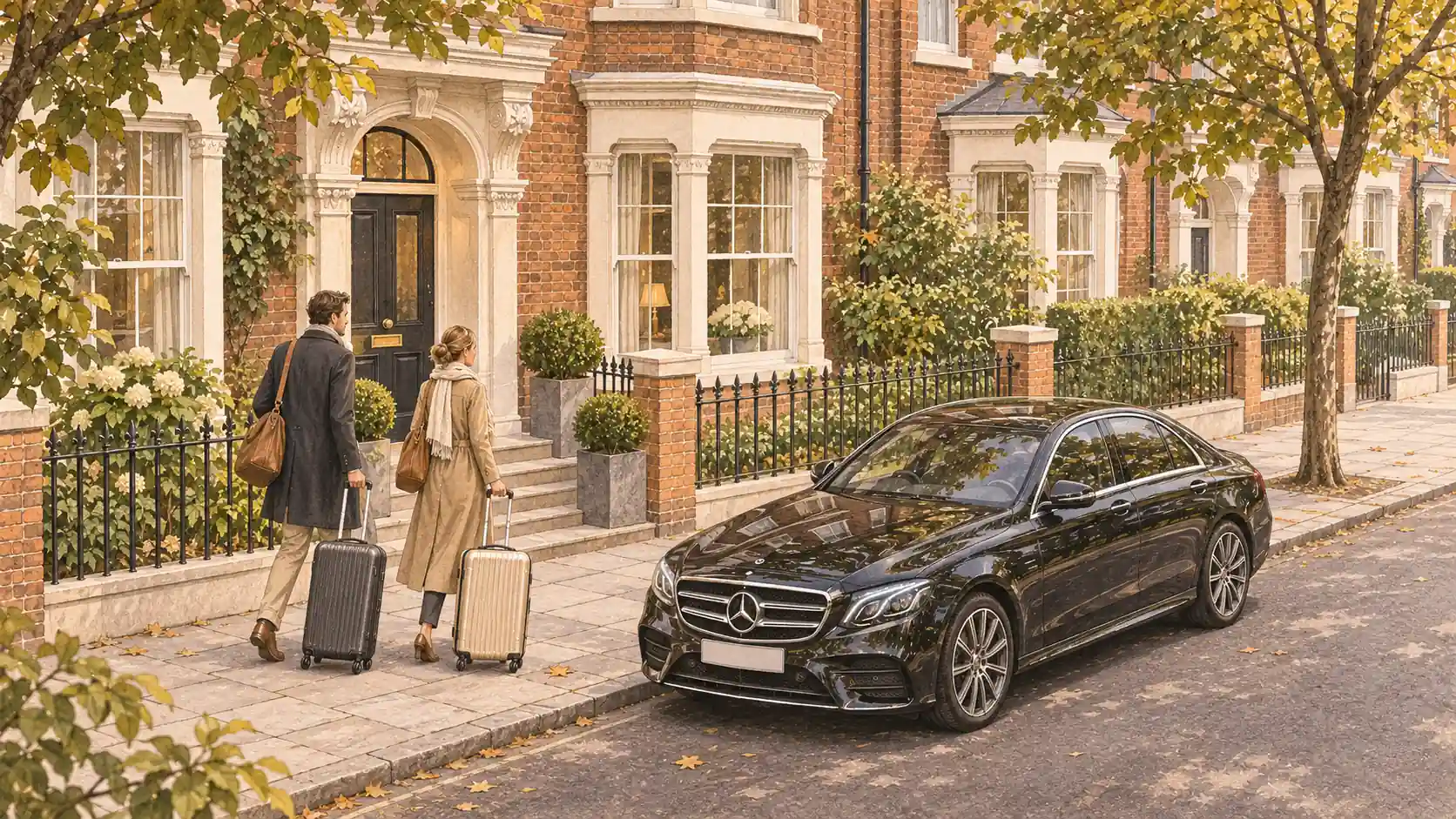
Paris–Brussels: airport, station or private address
For your Paris–Brussels transfer, if you are leaving from Paris-Charles de Gaulle or Orly, give your flight number and terminal so that the airport pick-up can be organised. If you are leaving from a station, give the train concerned and the agreed meeting point.
In Brussels, specify the arrival address: company, hotel, home or airport. Ask where the drop-off will take place and how an extra stop would be added to the route. These details allow the driver to price the transfer and estimate its duration.
For a return transfer from Brussels or its airport, check the meeting point and on-site contact separately. An airport pick-up is not organised in exactly the same way as a departure from a private address. Have each stage confirmed rather than leaving the return implicit.
Booking your private driver: lead time, flat rate and terms
Send your booking request as soon as the main details of the trip are known. No single booking lead time can be given for every situation. A specific vehicle, an international journey and a return trip all call for precise confirmation from the provider.
Your booking request should include the date, both addresses, the arrival time you need, the passengers, the luggage, the stops and the vehicle range you want. For London, add the crossing option you have in mind or ask the driver to specify the one they propose.
Before paying, get a written summary of the booking: vehicle or category, programme, price, payment, changes and cancellation. A flat rate should correspond to this programme. Ask what happens to the price and the booking in case of heavy traffic, delays or extended waiting at the border.
Budget: what affects the price of a long-distance private driver
The budget should be compared on the basis of quotes for an identical programme. The vehicle range, route, breaks, stops and return arrangements all need to be taken into account. For London, ask whether the cost of the crossing is included in the proposal.
Also check how tolls, parking and waiting time are handled. An offer that looks cheaper may cover a different scope. Our guide to what determines the price of a chauffeur-driven car helps you review these items.
To judge whether a private driver is better value than the train, compare the total for all travellers, including additional transport. The number of passengers and the services included matter as much as the amount shown. Without comparable offers for your date, concluding that one option is always more cost-effective would make no sense.
Choosing a reliable provider: documents, reviews and transparency
Identify the company that will actually carry out the transport. Ask for its professional details, the documents relating to its activity and confirmation of insurance cover for the planned international journey. The quote and the confirmation should clearly name the company you are dealing with.
Read several customer reviews, on Google or other platforms, looking for feedback on punctuality, communication and how unexpected events were handled. Reviews of a long-distance journey or an airport transfer are the most relevant for this type of trip. The average rating does not answer every question. Reviews complement your exchanges with the provider; they do not replace written commitments.
In case of a strike, a delay or unusual waiting time, ask about the options and their financial consequences before departure. No replacement solution should be taken for granted. Our questions to ask before booking a car with driver will help you complete these checks.
Checklist before a long-distance trip
- Exact addresses, dates and appointment times provided.
- Number of passengers and details of luggage confirmed.
- Vehicle, range and special requests accepted in writing.
- Door-to-door estimate distinguishing road, breaks and any crossing.
- Return trip and intermediate stops described separately.
- For London, crossing arranged and personal formalities checked.
- Quote specifying what is included, waiting time and any extra charges.
- Change and cancellation terms and a contact for the journey saved.
FAQ
How long does Paris–Brussels take with a private driver?
Ask for an estimate between your exact addresses, on the date and at the time chosen. Have driving time, breaks and the margin before your appointment set out separately. A generic duration between two city centres is no substitute for this estimate.
How much time should I allow for Paris–London via Eurotunnel?
The 35 minutes announced for LeShuttle cover the crossing only. The total time includes the road sections, check-in, controls, waiting and breaks. Have this programme detailed before setting an appointment on arrival.
Is the train better value than a private driver?
It deserves to be compared first when your addresses are close to the stations. A private driver meets a different need: transport between agreed addresses. Compare total duration, cost for the group and luggage handling.
Can I work or rest on board?
Suspension comfort, soundproofing and a quiet cabin can guide your choice if you want to read or rest. To work, ask for details of the proposed vehicle and the equipment useful for your activity.
What should I plan for delays or a return trip?
Get the terms that apply to waiting time and changes, as well as a contact you can reach during the journey. For a return trip, have both programmes confirmed: addresses, times and arrangements between the transfers.
Plan your Paris–Brussels or Paris–London journey with SB Drivers
Planning a chauffeur-driven trip in Europe from Paris? Contact SB Drivers with your addresses, date, the arrival time you need, the number of passengers and your luggage: we will suggest a vehicle and a programme suited to your long-distance journey.
Sources
[1] https://www.leshuttle.com/
To continue reading on the topic
Permanent link :
Paris–Brussels or Paris–London with a private driver: time, comfort and planning
Find the author on Google+
Tags : , Voyage d'affaire, véhicules sb drivers,
Commenter et noter cet article
